The demand for video content has never been higher. Between Meta, YouTube, TikTok, and OTT platforms, brands are expected to produce a relentless stream of fresh, engaging video assets. For many marketing teams, this creates a breaking point.
You cannot afford to hire an external production company for every single TikTok ad, but your internal team does not have the bandwidth or expertise to produce hundreds of high-quality assets a month. The solution is to build a scalable, in-house video production engine.
At Big Puddle, we have helped major brands like Ryze Mushroom Coffee build systems capable of outputting over 600 ad creatives per month. Here is the blueprint for building a production engine that scales.
1. Stop Treating Creative and Performance as Separate Teams
The biggest bottleneck in scaling video production is the disconnect between the people making the videos and the people running the ads.
In a traditional setup, the creative team produces a batch of videos and hands them off to the media buyers. A month later, the media buyers report back on what worked. This cycle is far too slow.
To scale efficiently, you must build cross-functional workflows. Your creative team, media buyers, and growth strategists should be in constant communication. When a specific hook or visual style starts performing well, the creative team should know immediately so they can iterate and produce variations on the fly.
2. Standardize Your Formats and Templates
You cannot reinvent the wheel for every single video. To achieve high volume, you need to establish clear, repeatable formats.
Develop a library of standardized templates for different platforms and objectives. For example, you might have a specific template for customer testimonials, another for product unboxings, and another for educational explainer videos. By standardizing the structure, your team can focus their creative energy on the messaging and visuals, rather than figuring out the basic layout of every new asset.
3. Leverage Hybrid Production Techniques
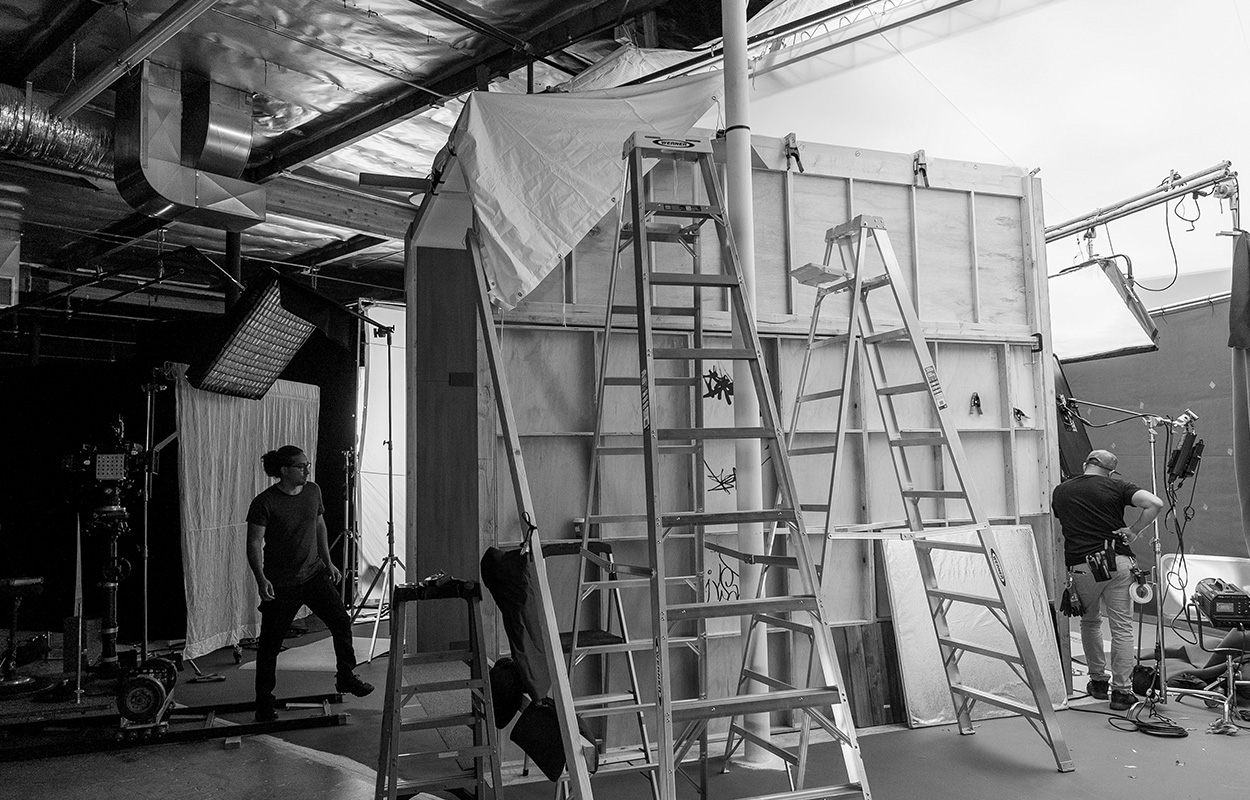
Live-action shoots are expensive and time-consuming. If you rely solely on filming new footage for every campaign, you will never achieve true scale.
This is where hybrid production becomes essential. By combining custom motion graphics, kinetic typography, animation, and highly curated stock footage, you can produce premium, high-converting content without ever stepping foot on a set. Furthermore, leveraging AI tools to generate backgrounds or extend environments can drastically reduce the need for physical set builds, as we did when producing a 200-episode vertical drama series for AdventHealth.
4. Build a Modular Asset Library
When you do invest in a live-action shoot, maximize the ROI by shooting modularly. Do not just film the specific scenes you need for one commercial. Capture a wide variety of b-roll, alternate hooks, and different calls to action.
Organize this footage into a centralized, easily searchable asset library. This allows your editing team to constantly remix and repurpose existing footage into fresh creatives, extending the lifespan of every shoot and keeping your content pipeline full.